





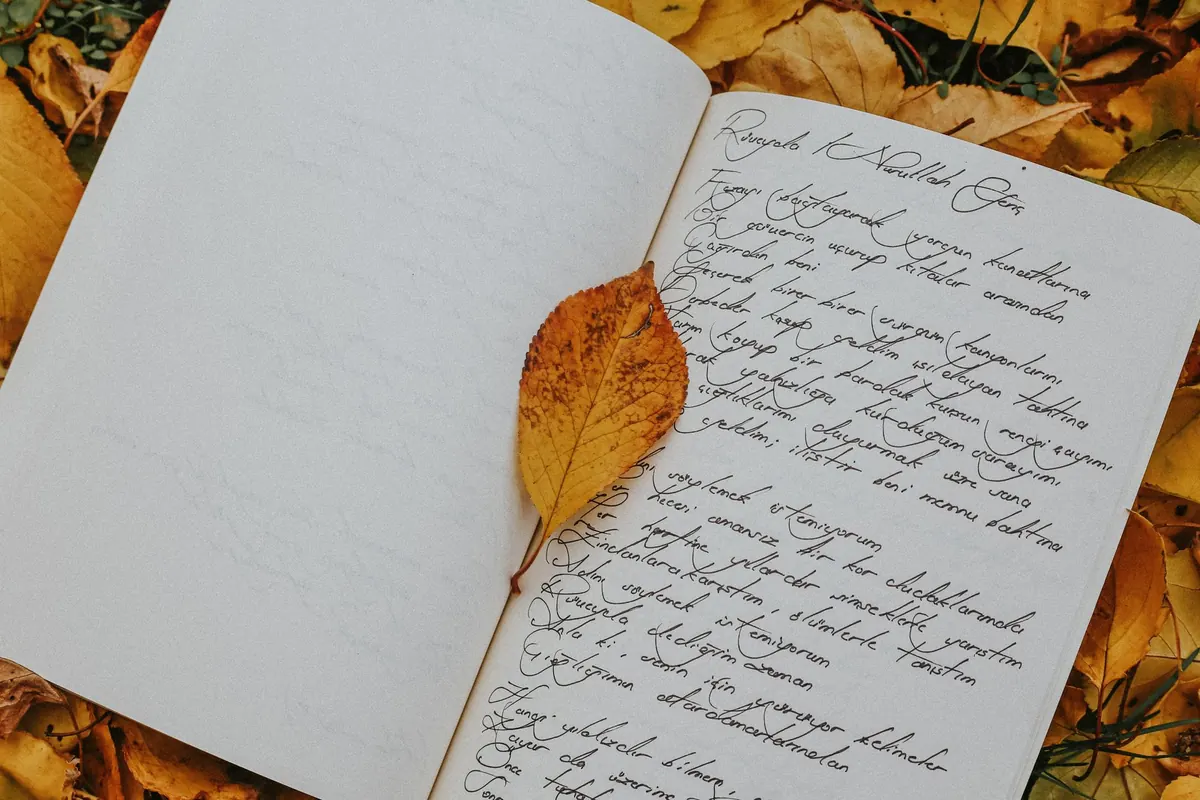
Autumn does part of the work for you. The evenings draw in, the garden stops asking for attention, and there is a particular pleasure in being indoors with a lamp on and something unfinished on the desk. It is a good season for starting a writing habit — not because willpower arrives with the colder weather, but because the days have made room for it.
What follows is a plan for the run-up to winter: timed sessions, seasonal prompts and tracking gentle enough to survive a bad week.
Why the season suits a new habit
January gets all the credit for fresh starts, and most of it is misplaced. Resolutions made in the cold and dark, on the back of a fortnight of late nights, rarely last past the first Monday. Autumn is easier. The academic year has trained most of us to treat September as a beginning, and the shortening days push us indoors without anyone having to nag.
More usefully, autumn gives you a container. The ten or twelve weeks between the end of summer and the Christmas scrum is a defined, reachable stretch of time. A habit that survives from the first fallen leaves to the first frost has something to prove. You are not promising to change your life; you are promising to write a few times a week until the nights get long.
Decide the shape before the first session
Most writing plans fail at the design stage rather than the writing stage. "Write more" is not a plan; it is a wish with no address.
Pick a slot you can defend
Choose a time of day and treat it as an appointment. Early mornings before the house wakes, the twenty minutes after lunch, the hour between clearing up and going to bed — the specific hour matters less than the fact that it is fixed. Anchor the new habit to something you already do: after the coffee is made, after the school run, after the last email of the day. The existing routine carries the new one through the first fortnight, which is when it is most likely to slip.
Define what counts as a session
A session should be small enough to finish on a bad day. Two hundred words is a session. Ten minutes with a notebook is a session. Reading back yesterday's page and marking three things to fix is a session. Decide the minimum now, in writing, so that you are not negotiating with yourself at nine in the evening.
Choose a project, or refuse to
Some writers need one piece of work to aim at — a short story, a sequence of poems, a family history. Others freeze at the thought. If you are in the second group, make the season itself the project: a notebook of observations kept from October to December, honest and untidied.
Timed sessions beat waiting for a free afternoon
The temptation is to wait for a long, empty afternoon and write in one heroic stretch. It rarely happens, and when it does, the blank page is intimidating. A timer solves both problems: it gives the session a shape, and it gives you a reason to begin when you have only twenty minutes to spare.
- Ten minutes. One prompt, no editing, no deleting. Stop mid-sentence if the timer goes and you know what comes next — that makes tomorrow easier to start.
- Twenty minutes. Two ten-minute blocks. The first is drafting; the second is a short list of where the piece goes next, written in plain sentences.
- Forty-five minutes. Fifteen minutes reading back, twenty-five minutes writing, five minutes noting what to do next time.
- Ninety minutes. A weekend session. One long stretch with a break in the middle and a glass of water within reach.
Two rules keep timed sessions honest. Do not edit as you go — keep a separate page headed "fix later". And finish with a sentence about what happens next, even if it is only "she opens the letter and I don't know yet". The next session then starts with a decision already made.
Autumn prompts that move the page
Prompts are not a substitute for a project; they are a way of getting moving when the project feels heavy. Good ones are specific and sensory. Vague prompts produce vague writing.
- The first frost, and who notices it first.
- A bus stop at six in the evening in late October.
- Someone walking home in the rain without a coat, and what they are thinking about instead.
- An object found in a coat pocket that has not been worn since last winter.
- A conversation held while tidying a shed or raking leaves.
- A dish that only ever gets made in autumn.
- A letter written in November and never sent.
Keep a harvest notebook: a single page for lines, images and fragments that arrive while you are doing something else. Prompts feed the notebook, and the notebook feeds the longer work.
Tracking that does not turn into a punishment
Streak counters are excellent until the day you break one. Then they become evidence of failure, and the temptation is to abandon the whole thing.
Try a paper calendar and a pen instead. Tick the days you write, and once a week count the ticks rather than inspecting the gaps. Aim for four sessions a week rather than seven, and hold to one rule: never miss two days in a row. A missed Tuesday is nothing. A missed Tuesday and Wednesday is how habits end.
Ten minutes on a Sunday is enough for a weekly review. Ask three questions — what worked, what got in the way, and what is the first thing I will write next week — and write the answers down. A plan you can read is worth more than a plan you remember.
Reward the session rather than the output. A finished chapter is not entirely under your control; ten minutes at the desk is.